
1980s plastic Wylex board → 12-way full-RCBO + SPD, Mapperley NG3.
Fitted 9am–2pm, EICR upgraded from Unsatisfactory to Satisfactory same day.
Mapperley, Nottingham
An 18th Edition consumer unit with full RCBO protection, fitted on a typical Nottingham home in 4–6 hours, signed off to BS 7671, and notified to building control through NICEIC, so your insurer, EICR and EV charger install all stop being blocked.
From £550 + VAT · Same-day install · No call-out fee · 6-year NICEIC Platinum Promise
A fuseboard replacement, properly called a consumer unit upgrade, swaps the box that distributes power around your home for one built to the current 18th Edition wiring regulations (BS 7671 Amendment 2). Modern boards have a metal enclosure for fire containment, surge protection, and an RCBO per circuit so a fault on one socket ring doesn't kill power to the whole house.
Most upgrades in Nottingham fall into one of four buckets: BS 3036 rewireable fuseboards from the 1970s, plastic Wylex 'standard' boards from the 1980s, split-load consumer units from the 2000s with shared RCDs (the most common upgrade we do today), and damaged units after a fault or water ingress.
The trigger is usually external, an EICR has flagged it as a C2 or C3, an EV charger installer has refused to wire onto the existing board, or a home insurer has asked for evidence of compliant protection at renewal.
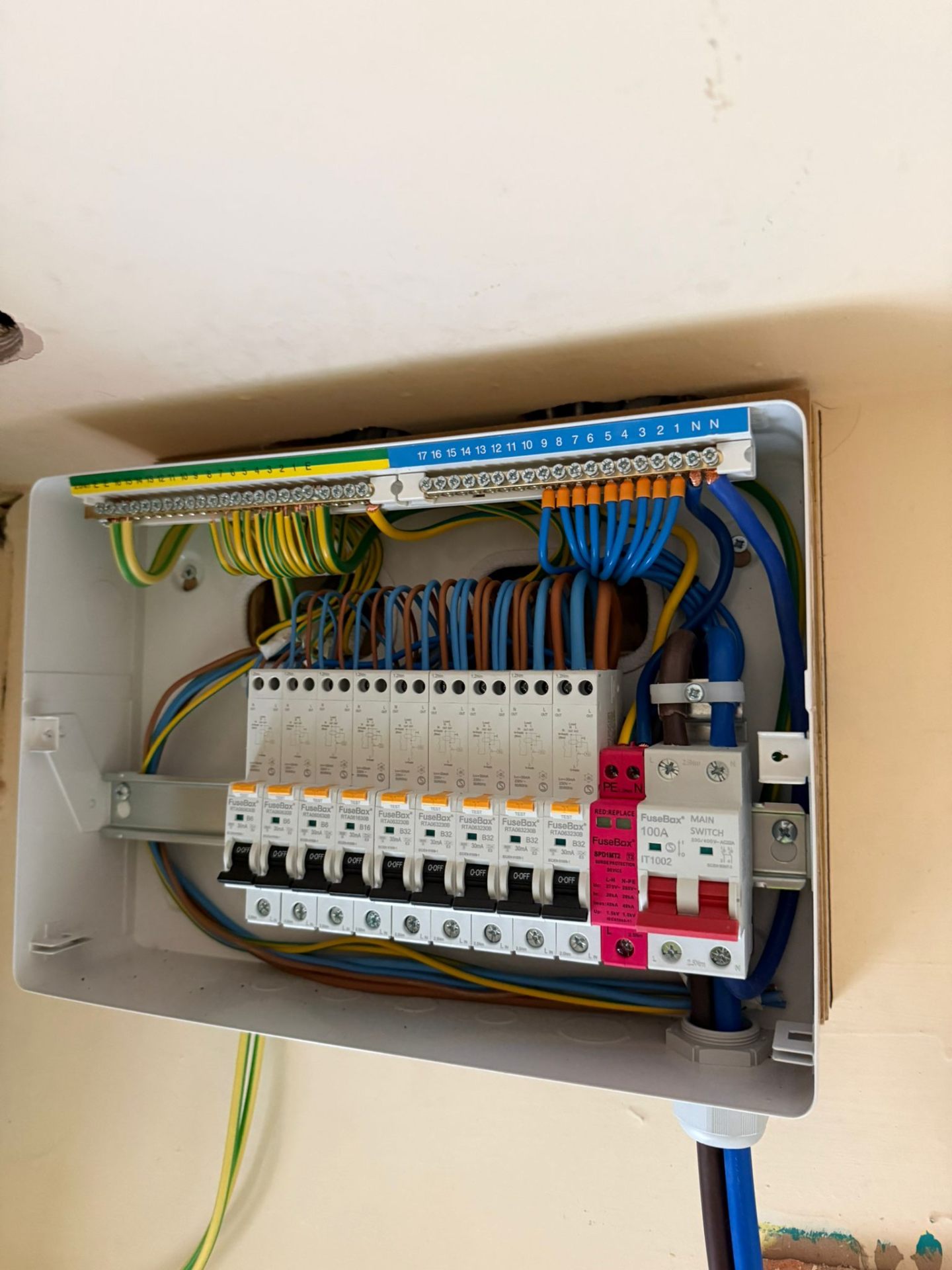
Old plastic consumer units are now coded C2 ('potentially dangerous') on most EICRs because, in the event of a sustained internal fault, they melt rather than contain. The 18th Edition response was metal enclosures throughout, and that is now what every insurer expects to see.
BS 3036 rewireable fuses (the ones with fuse wire across a porcelain carrier) are more dangerous still, they offer no earth fault protection and rely on the homeowner replacing fuse wire correctly. We still find them in Nottingham every month, usually in homes that haven't changed hands since the 1970s.
The wrong fix is downgrading or bypassing protection so the new board doesn't keep tripping. If the board trips when energised, the cabling behind it has a fault, that fault must be found and corrected, not hidden under a bigger MCB. We refuse to do this and so should anyone you'd want in your home.
We test every circuit on the existing board, insulation resistance, continuity, polarity. Anything that fails is identified before we energise the new board.
We isolate at the meter cut-out (with DNO permission where required), discharge the supply and remove the old board.
Metal enclosure, surge protection device, dual RCD or full RCBO depending on spec, neatly dressed and labelled to BS 7671.
Each circuit is re-terminated to torque, full live testing, earth fault loop, RCD timing, polarity, and a new circuit chart fitted.
Electrical Installation Certificate issued same day, NICEIC building control notification posted out within 10 working days. Done.
A fault on the kitchen ring doesn't kill the lights, the freezer or the boiler. Every circuit isolated independently.
SPD fitted as standard, required for all 18th Edition installations and protects sensitive electronics from transient over-voltage.
Replaces C2 'potentially dangerous' codes on previous EICRs and meets every UK home insurer's protection requirements.
Most homes are off power for 3–4 hours mid-morning, energised and tested by mid-afternoon.
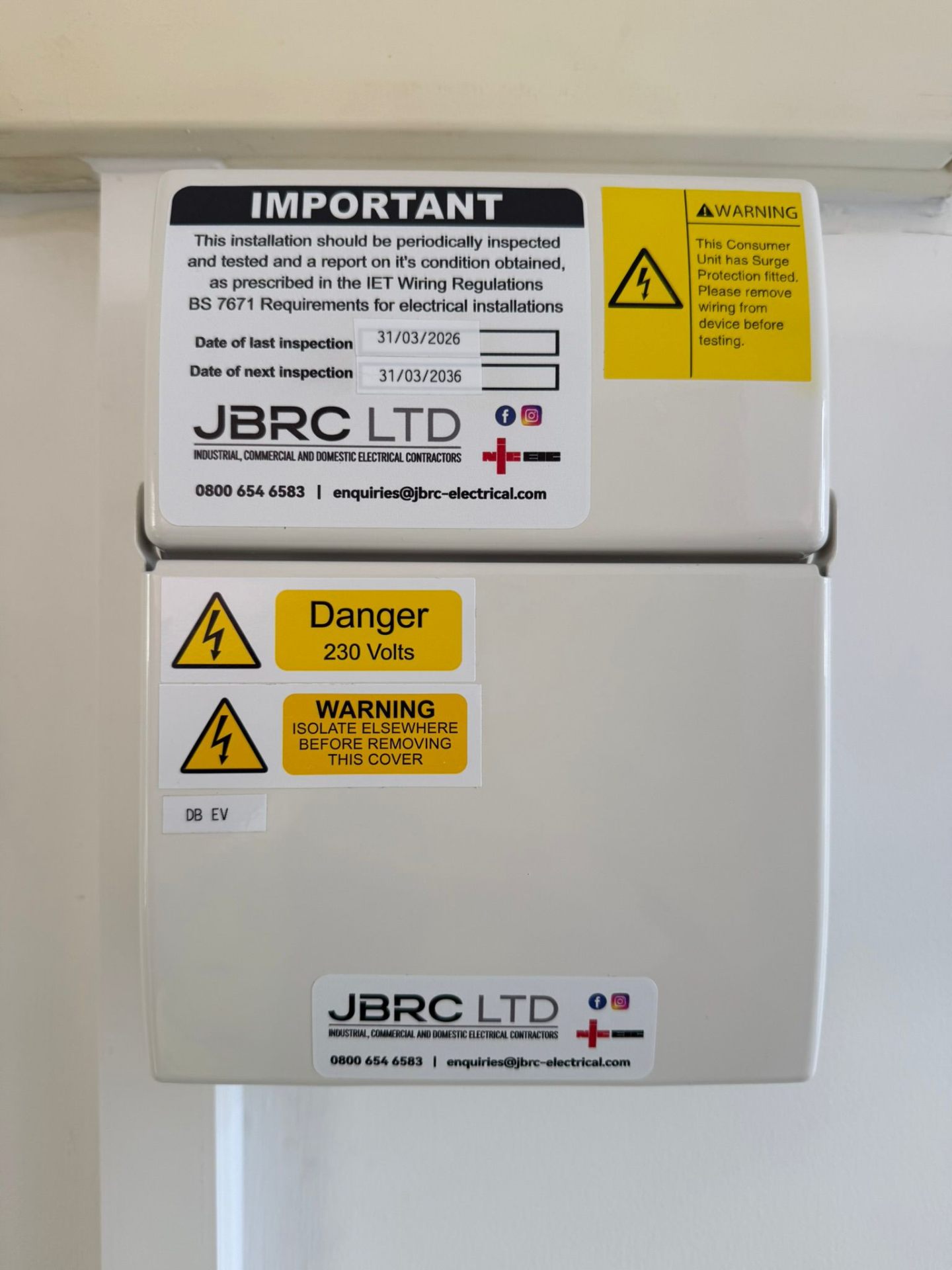
Live testing the new consumer unit, every RCBO is timing-tested before the customer takes possession.
There are two protection layouts on a modern domestic consumer unit. Dual-RCD splits the circuits into two banks behind two 30mA RCDs, cheaper, but a single fault still drops half the house. Full-RCBO gives every circuit its own combined MCB+RCD, so a fault on one circuit only takes that circuit out. We fit full-RCBO as standard now because the cost difference is £80–£150 and the lived experience is dramatically better, especially in homes with freezers, fish tanks, or anyone working from home.
Surge Protection Devices (SPDs) became mandatory under 18th Edition Amendment 2 for most domestic installations, certainly any with electronic equipment connected. We fit Type 2 SPDs at the consumer unit, which clamps transient over-voltage from lightning or grid switching down to safe levels. Without one, a single nearby strike can take out every connected device in the house.
The other things 18th Edition asks for: AFDDs (arc-fault detection devices) on bedroom and certain 'high risk' circuits where requested by the designer, RCD protection on every circuit (not just sockets), and metal enclosure throughout. We discuss whether AFDDs are worth specifying on your particular property at the survey, they are not yet mandatory in domestic, but they are for HMOs and care premises.
Fuseboard pricing in Nottingham depends on circuit count, layout choice, and any remedial work the pre-test reveals. Below are real prices from the last 6 months.
| Scope | Typical price (incl. VAT) | Notes |
|---|---|---|
| Standard 6-way dual-RCD upgrade | £550 – £700 | Smaller flats and 2-bed homes. |
| Full-RCBO 10-way (typical 3-bed) | £750 – £950 | Our most fitted spec. |
| 12–16 way RCBO with SPD + AFDDs | £950 – £1,400 | Larger homes, home offices, EV-ready outlets included. |
| Plus remedial work (per circuit) | £40 – £180 | If pre-test flags faults, we quote them separately before starting. |
Fuseboard replacement is one of our most-booked single-day jobs across Nottingham. We have engineers in NG1–NG7 daily, and same-week availability across Arnold, Hucknall, West Bridgford, Beeston and Long Eaton.
Co-Directors
NICEIC Approved Contractor, NICEIC Part-P Domestic Installer
Joshua Richardson and Benjamin Clurow co-founded JBRC Ltd and are the two named directors at Companies House (#17015285). They jointly run the business, both surveying, pricing and signing off consumer unit upgrades across Nottingham, so every customer is dealing directly with a director from quote through to certification.
1980s plastic Wylex board → 12-way full-RCBO + SPD, Mapperley NG3.
Fitted 9am–2pm, EICR upgraded from Unsatisfactory to Satisfactory same day.
Mapperley, Nottingham
Pre-EV-charger upgrade in Edwalton: 6-way → 14-way RCBO with EV-ready spare.
Charger booked in 2 weeks later, straight onto the new spare way.
Edwalton, West Bridgford
BS 3036 rewireable fuses → 10-way RCBO, retired couple's bungalow, Arnold.
First proper protection in 40 years. Insurer renewal cleared on the certificate alone.
Arnold, Nottingham
Last updated 22 April 2026
Free survey, fixed price, fitted in a day, NICEIC certified.