Technical depth
Tray vs ladder rack vs trunking vs galvanised conduit, picking the right system for the job
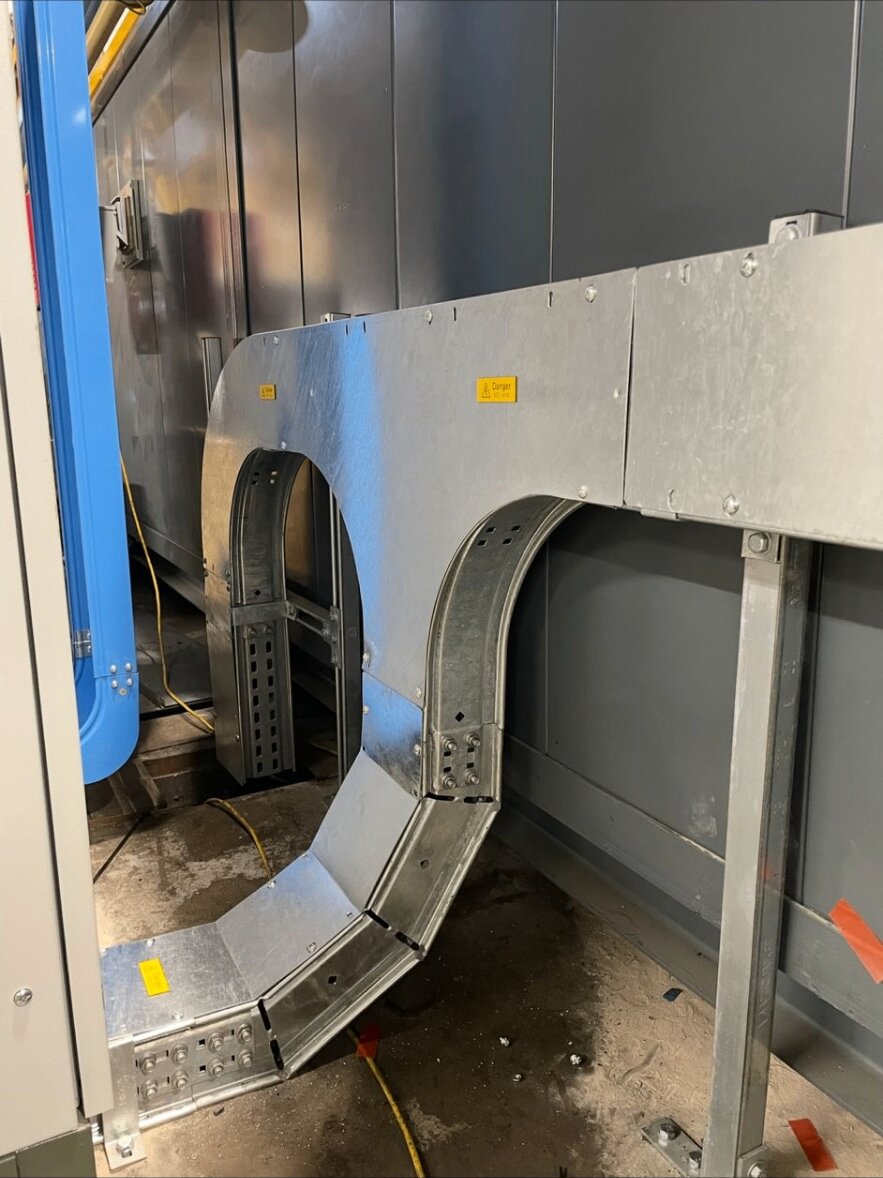
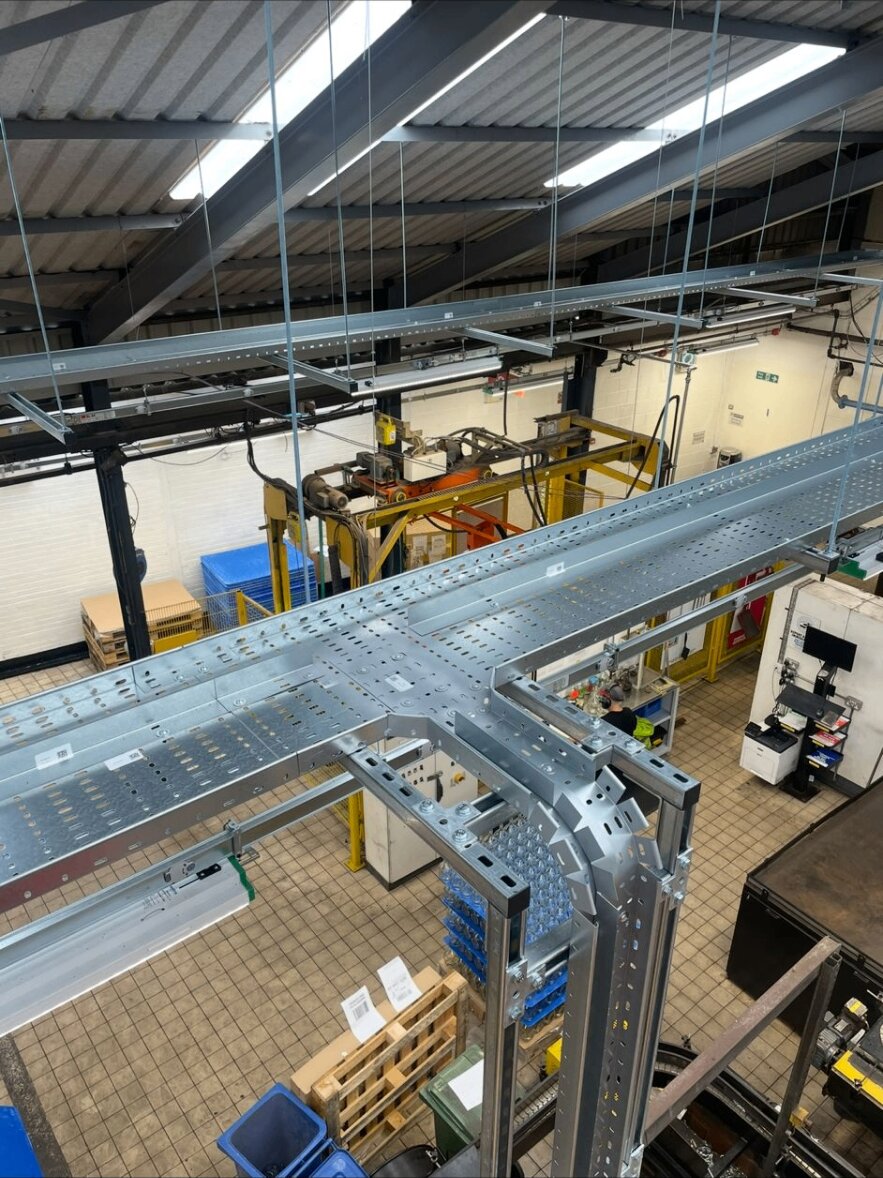
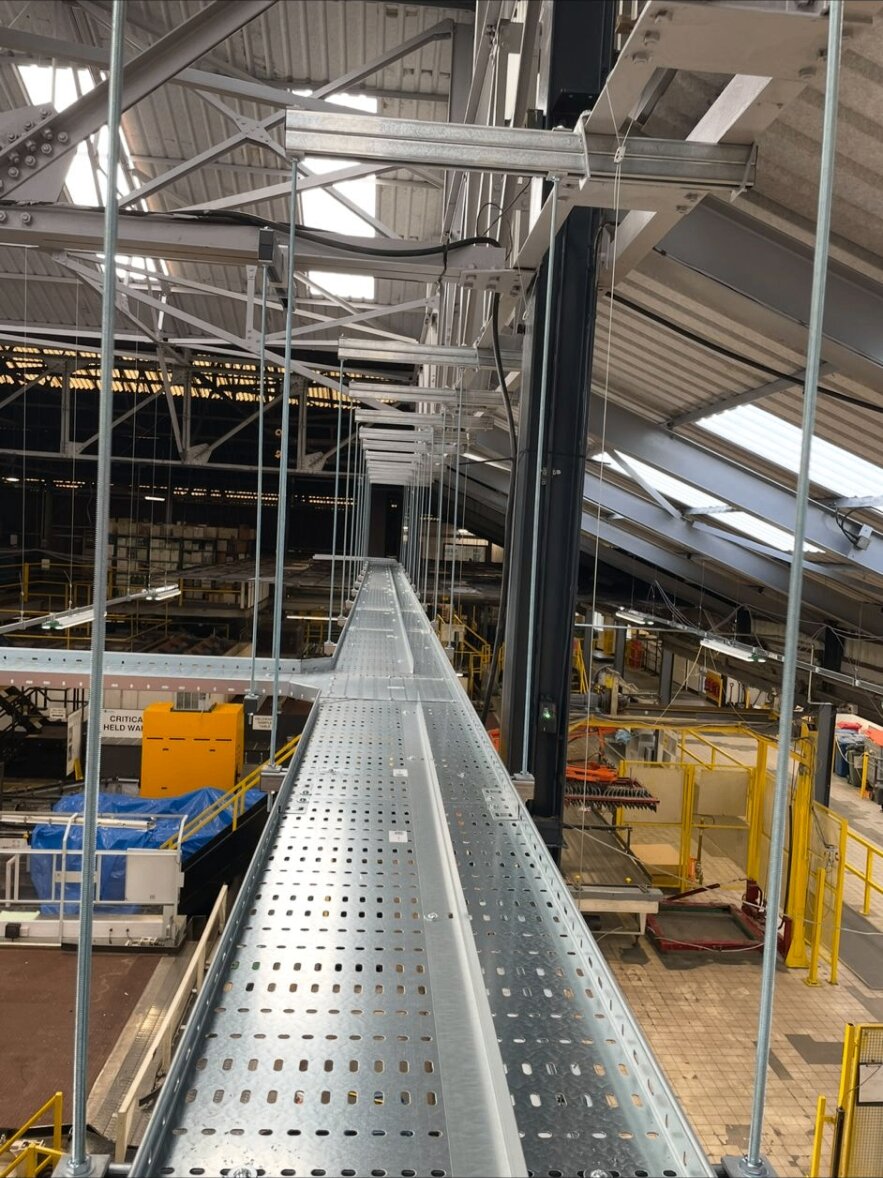
Heavy-duty cable tray (returned-edge, hot-dip galvanised, typically 100–600mm wide) is the workhorse for power and control runs above 25mm², strong, well-ventilated, easy to add to. We default to medium- or heavy-duty class to BS EN 61537 on industrial sites, with support centres calculated from the loaded weight per metre rather than picked from a catalogue default. Returns, tees and bends are factory-formed and bonded with proprietary earth straps across every joint.
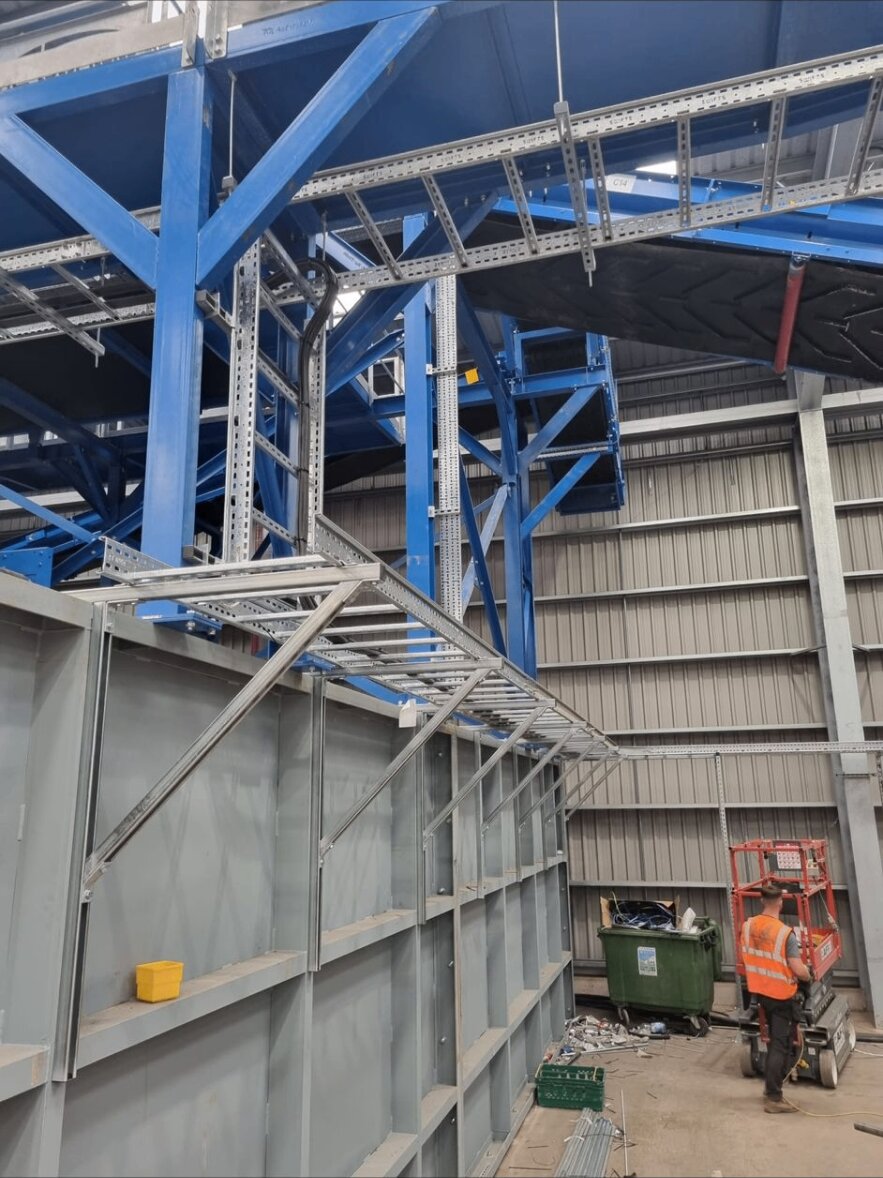
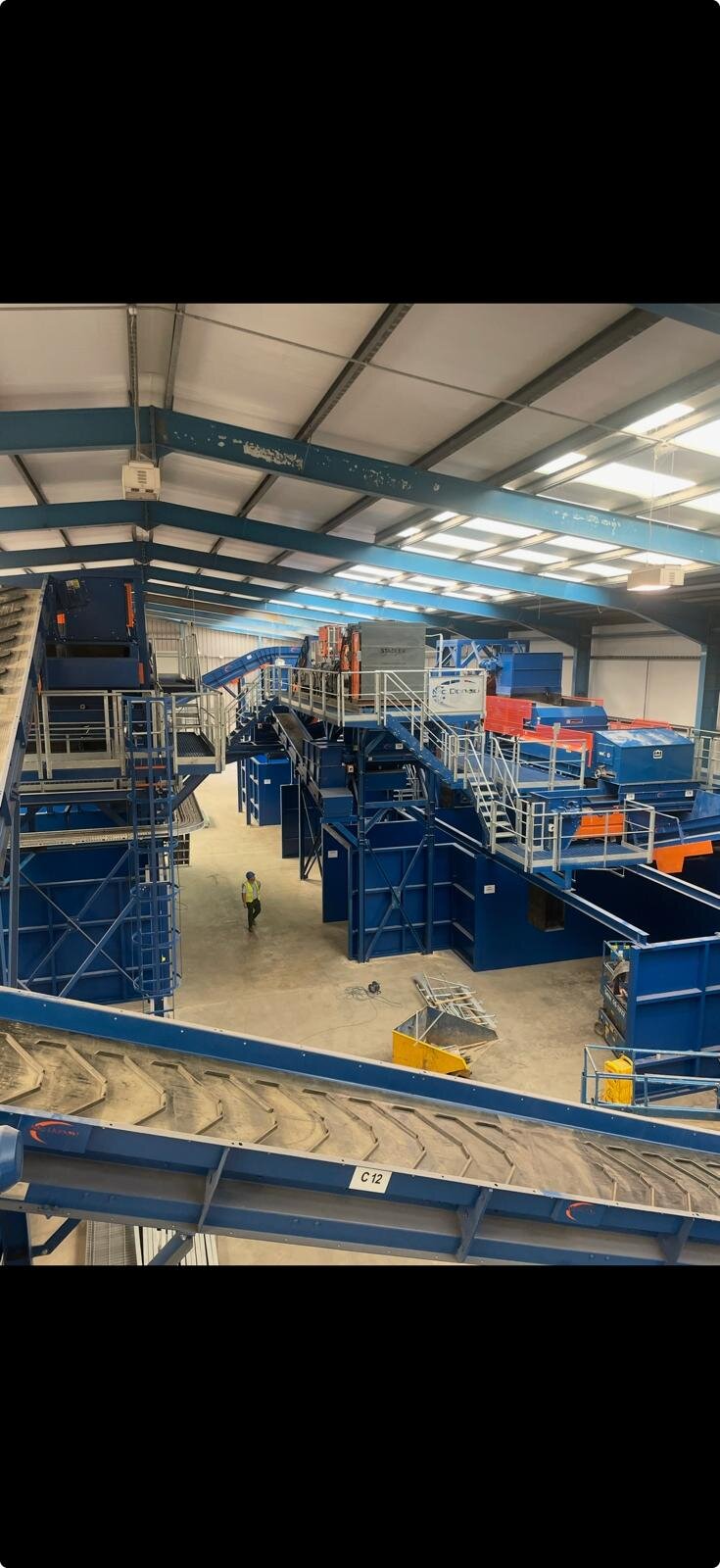
Ladder rack (rung-style, hot-dip galvanised) is the right answer for very heavy power runs, long SWA sub-mains, busbar feeds, motor cables 95mm² and above. The rungs give the cables a mechanical bearing surface, ventilation is excellent for thermal management, and the structural strength supports brackets at 2–3m centres instead of every metre. We use ladder rack on every recycling and process site we install because the dust and vibration are unforgiving.
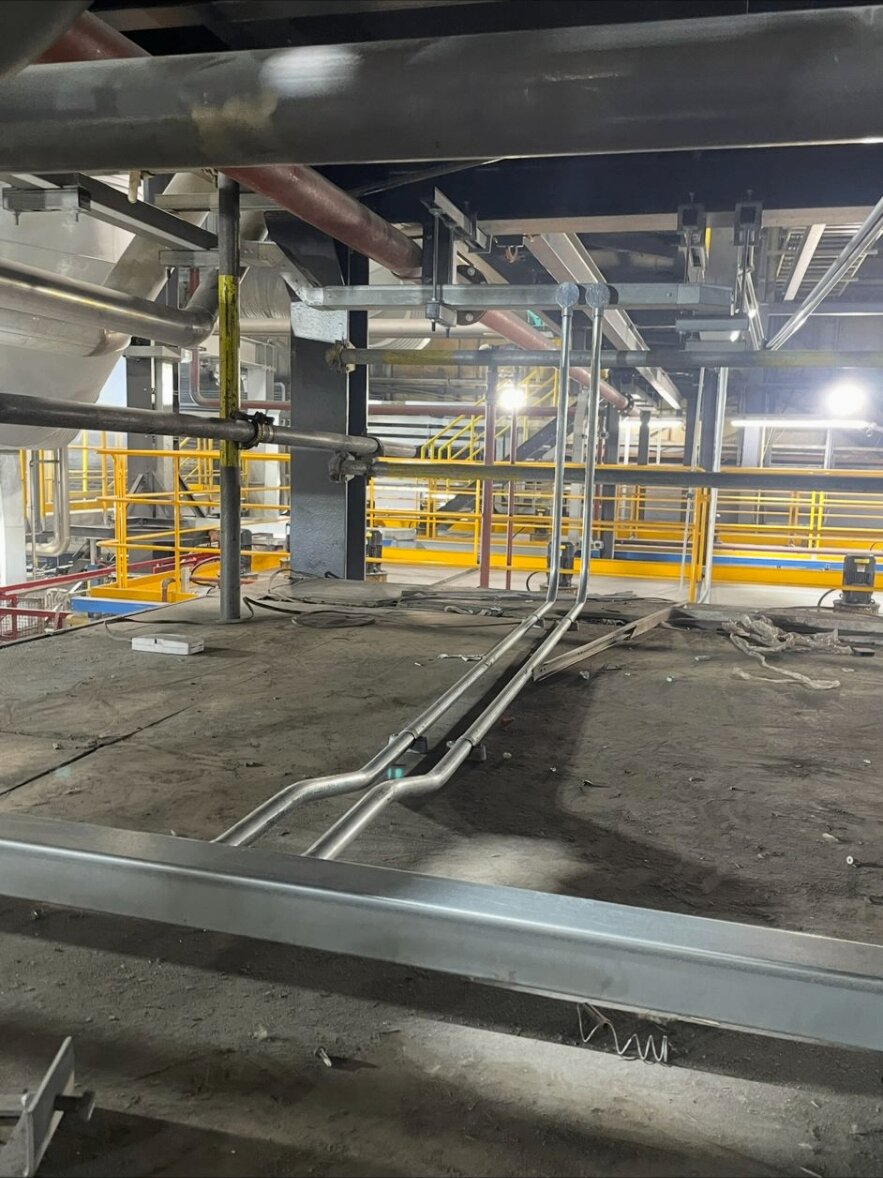
Steel trunking (50–300mm, lid-on) suits dense control and instrumentation work where you want segregation between power, control and data, typically running into MCC panels and field junction boxes. Galvanised conduit (heavy-gauge steel, screwed) is reserved for mechanical-protection runs, motor tails, machine drops and anywhere the cable is exposed to impact, oil or hot work. We never mix systems on a single run without a proper transition box, a clean install reads as one decision per run, not a patchwork.